
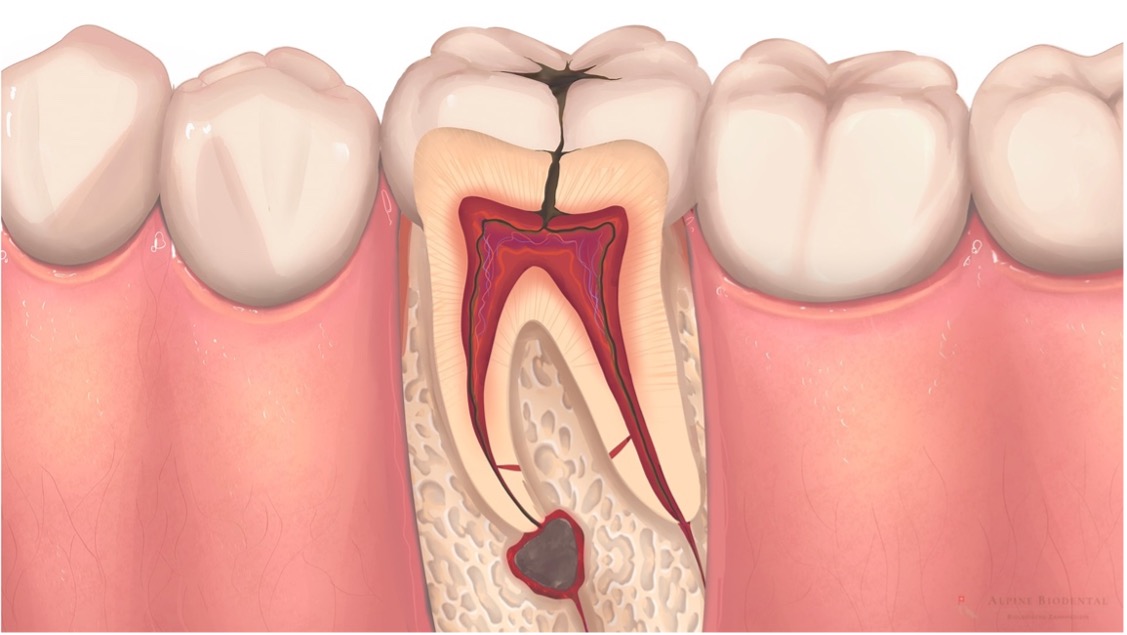
When it comes to dental health, two of the most common concerns that strike fear in patients are wisdom teeth extractions and root canals. Both are among the American Dental Association’s (ADA) “Top Ten” public concerns, often associated with pain, infection, and lengthy recoveries. Yet, these procedures are not just common—they are often necessary to prevent serious complications and to preserve oral health.
In this issue, we will discuss two great misconceptions in dentistry- Wisdom teeth & Root canals: what’s the fuss and why they are important in dental treatment.
Wisdom Teeth: The Unwanted Guests
Wisdom teeth, or third molars, usually appear between the ages of 17 and 25. For some lucky individuals, they emerge without issue. However, for many, these late-arriving teeth come with problems:
- Impaction – There isn’t always enough room in the jaw for wisdom teeth to fully emerge. They can become trapped beneath the gums or grow at odd angles.
- Infection and Gum Disease – Partially erupted wisdom teeth create hard-to-clean spaces where bacteria thrive, leading to cavities, swelling or abscesses.
- Crowding and Damage to Neighboring Teeth – Impacted teeth can push against existing molars, causing alignment issues and cavities.
Extraction is often recommended to prevent these complications. Modern techniques, including 3D imaging and sedation options, make the process safer and more comfortable than ever. While mild swelling and soreness are common for a few days, early removal can prevent years of recurring pain and dental issues.
Root Canals: Saving, Not Removing Teeth
Few dental procedures are as misunderstood as the root canal. Often unfairly labeled as “painful,” the reality is that root canals relieve pain, not cause it. A root canal is necessary when the pulp inside a tooth—which contains nerves and blood vessels—becomes infected or inflamed due to:
- Deep cavities that reach the nerve
- Cracked or broken teeth
- Severe trauma or repeated dental procedures
During a root canal, the dentist removes the infected pulp, cleans and disinfects the tooth, and then seals it to prevent future problems. With modern anesthesia and advanced instruments, most patients report little more than the sensation of getting a filling.
A root canal saves the natural tooth, avoiding extraction and the need for costly replacements like bridges or implants. Post-treatment soreness is temporary and usually managed with over-the-counter medication. Most patients return to normal activities within 24–48 hours.
Why These Procedures Matter
Ignoring dental pain from wisdom teeth or infected roots can lead to serious consequences, including:
- Spread of infection to other teeth, gums, or even the bloodstream
- Permanent damage to neighboring teeth or jawbone
- Increased complexity and cost of future treatments
The goal of both procedures is prevention and preservation—preventing the spread of infection and preserving the overall function and health of your mouth.
The Takeaway
While wisdom teeth extractions and root canals are among the ADA’s most discussed public concerns, understanding their purpose helps ease fear. Both are common, safe, and highly effective treatments that address pain, prevent infection, and protect your smile for the long term.
If you experience persistent tooth pain, swelling, or sensitivity, don’t delay. Early evaluation by a dentist can make the difference between a simple solution and a complex problem. In dentistry, acting today often saves a tooth—and spares tomorrow’s discomfort.
Dr. Kendal V. O. Major is Founder and CEO of Center for Specialized Dentistry which is a comprehensive family dental practice operating in Nassau. He is the first Bahamian Specialist in gum diseases and dental implants since 1989. He also is a certified Fastbraces provider. His practice is located at 89 Collins Avenue, Nassau at (242)325-5165 or [email protected]

See angles wisdom tooth resulting in a cavity on tooth in front

See cavity on biting surface resulting in nerve damage- a root canal needed


